



コンクリートスラブの相対湿度試験でよくある5つの間違いを避ける
You can’t count on a successful flooring installation over concrete without testing the slab for moisture according to the ASTM F2170 standard. Fortunately, the standard isn’t hard to follow, and today’s technology makes it easier than ever. Here are five common, honest mistakes to watch out for:
- Not performing RH testing at all.
- Assuming one RH sensor will do the job.
- Installing the RH sensor upside down. (Yes, it’s happened.)
- Trying to recover and reuse a single-use RH sensor.
- Waiting 72 hours after installing RH sensors to take readings, when ASTM F2170 now allows readings after 24 hours.
If you’re installing nearly any type of flooring over a concrete slab, you need accurate concrete moisture test data showing relative humidity (RH) readings within the flooring manufacturer’s specifications. ASTM F2170 in-situ probe testing is widely considered the most reliable way to determine the moisture condition of a concrete slab.
But as with anything else, you need to know the procedures and how to use the tools properly. The better prepared and more experienced you are, the better your results will be.
Even with the best-laid plans, mistakes still happen. Here are five cautionary tips that come directly from Wagner Meters support call logs.
間違いその1:RHテストを実施しない
This is probably the worst mistake you can make. Just as with skipping any other diagnostic test, the potential cost to your bottom line and your reputation can be very high if things go wrong.
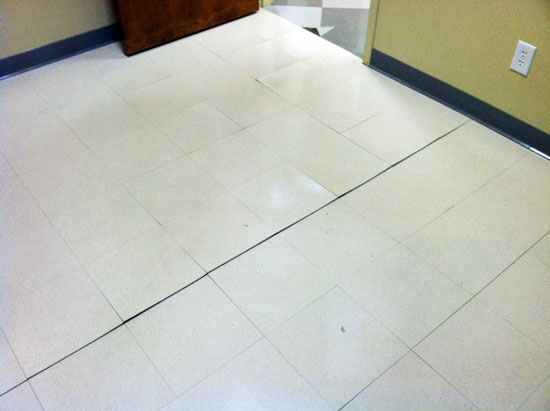
Skipping concrete RH testing can lead to significant flooring damage and, more importantly, damage to your reputation.
Wagner Meters takes great pride in providing personalized customer service to help flooring professionals succeed with concrete RH testing, sometimes even when they’re not using our Rapid RH® in-situ testing system. We keep records of our more significant support calls. Here’s a cautionary tale from our files: A general contractor (GC) in charge of construction and renovation for a large school district was building a 2,000 sq. ft. addition to his own home. Once the HVAC was up and running, the wood flooring was delivered. Because of the GC’s busy schedule, the home addition was a low priority, so the wood flooring had nine months to acclimate.
The GC subcontracted the flooring installation, but the flooring contractor didn’t perform any RH testing on the concrete slab. The GC didn’t fully understand the importance of RH testing at the time, because the school district always hired inspection companies to do the testing. So when the flooring contractor told him the adhesive would act as a moisture barrier, the GC gave the go-ahead. Two months later, the floor failed throughout the entire 2,000 sq. ft. addition. Lesson learned: do your own test to be sure. Even if another test has been done, two sets of results are better than one.
間違いその2:湿度センサーXNUMXつで十分だと思い込む
We sometimes get calls from customers asking whether one Rapid RH Smart Sensor in a slab will do the job. The answer is no. ASTM F2170 calls for three tests for the first 1,000 sq. ft. and at least one additional test for each additional 1,000 sq. ft.
That’s because moisture conditions can vary widely across a slab due to things like staggered pour times, uneven aggregate distribution, and even exposure to sunlight. You don’t want one untested section of the slab, like the part that was in the shade, to ruin your entire flooring installation.
間違いその3:RHセンサーを逆さまに設置する
Wagner Meters, an innovator in wood and concrete moisture measurement since 1965, makes an in-situ probe testing system that complies with ASTM F2170. Wagner’s Rapid RH L6 Smart Sensor is a cylindrical sleeve with a closed bottom. You might think the closed end should be at the top to enclose the test hole, but it doesn’t work that way.
The closed end goes in first, trapping a very small volume of air between the bottom of the sleeve and the bottom of the hole inside what’s called an “isolation gasket.” The onboard electronic sensor takes its RH reading in that volume of air. Follow the instructions carefully. Once the sensor is installed in the hole, you can’t remove it without damaging it, so get it right the first time.
無料ダウンロード – コンクリートがなかなか乾かない4つの理由
間違いその4:RHセンサーを回収して再利用しようとする
Rapid RH L6 Smart Sensors are designed for single use. You can’t remove them without damaging them. Even if you manage to remove one with the sleeve intact, the sensors are very sensitive, and their calibration can’t be guaranteed after that kind of handling.
If you want reusable sensors, the Rapid RH 5.0 Smart Sensors are designed to be reused, and their calibration can be verified with the EasyCare CalCheck™. Calibration is essential for accurate testing, and ASTM F2170 spells out the calibration requirements for all sensors.
間違いその5:湿度センサーを設置してから72時間待ってから測定する
Seventy-two hours is a long time to wait when it isn’t necessary. ASTM F2170 originally called for a 72-hour equilibration period, but the 2018 revision cut it to 24 hours. It pays to keep up with changes like this, and our コンクリートの水分に関する記事 are a good place to start. If there’s ever a disagreement on site, don’t argue about it. Instead, check the standard itself, ASTM F2170 現場プローブを用いたコンクリート床スラブの相対湿度測定のための標準試験方法, which you should always have with you on the job.
これらのよくある間違いを回避する方法
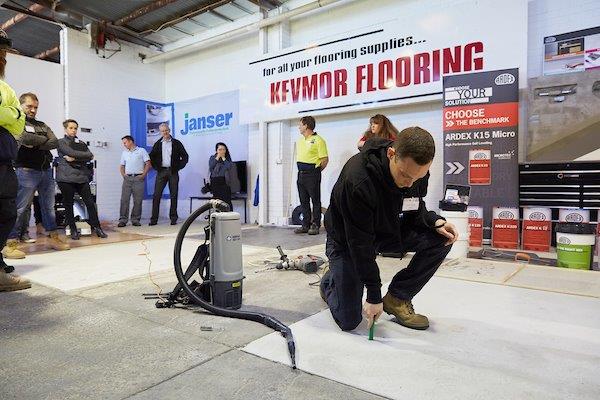
Hands-on training is one of the best ways to avoid testing mistakes.
Here are some simple ways to avoid these common mistakes with your concrete RH testing.
You can build your understanding and skill in concrete moisture testing with training and certification from the 国際コンクリート修復協会 (ICRI) through its Concrete Slab Moisture Testing (CSMT) certification program.
Another way to avoid mistakes is to carry a copy of ASTM F2170 with you whenever you’re on the job.
ブックマークする concrete moisture testing articles for an extensive library of RH testing articles and reference materials.
ご不明な点がある場合は、お電話ください。 541-291-5123. Our support staff would love to help you avoid a problem before it happens rather than help you pick up the pieces afterward.

ジェイソンは、幅広い業界で20年以上の営業および営業管理の経験を持ち、オリジナルのRapid RH®コンクリート水分試験器を含む様々な製品を市場に投入してきました。現在は、Wagner MetersでRapid RH®製品営業マネージャーを務めています。
最終更新日: 9 年 2026 月 XNUMX 日

 800-634-9961


ジェイソン、
築5年ほどの、約10,000平方フィートの建物があります。このプロジェクト開始以来、空調設備はずっとオフになっています。
交換は済んでおり、建物内部の工事が完了したらどうなるかが分かります。LVT、シートビニール、コーブベースの設置が必要な段階です。2022年90月に、建物の両側に5台ずつRapid RHを設置してテストを行いました。乾燥テストでは、どちらも5,6℃(低湿度)でした。天井タイルはまだ設置されておらず、屋上ユニットは今週2023年XNUMX月XNUMX日、XNUMX日に稼働予定です。空調設備はどれくらいの時間稼働させれば空間を空調できるでしょうか。この製品のメーカー保証と設置要件を裏付ける文書はありますか?
商業用フローリングソリューション
918-798-9119
ロバート・スワンク
ロバート:
ご質問ありがとうございます。ASTM F2170規格に準拠した有効なRH%試験を行うには、試験の48時間前と試験中の24時間を通して、環境が使用条件を満たしている必要があります。お役に立てれば幸いです。